


Dubai Real Estate Market Update: An Insider Conversation on Opportunities, Risks and What’s Really Happening on the Ground

By Manuel Huerta · 19m. reading time
In April 2026, Drumelia CEO Artur Loginov sat down with Farooq Syed, a Dubai-based real estate professional with 18 years of experience and a 240-person team across Dubai and Abu Dhabi, to discuss what is really happening in the Dubai property market. With approximately 40 days of geopolitical tension reshaping buyer behaviour and creating rare pricing opportunities, this conversation offers the kind of on-the-ground perspective that international headlines rarely capture.
For Drumelia's clients, many of whom own property in both Marbella and Dubai, this is essential reading. The article below expands on every key theme from the conversation, using direct quotes and first-hand insights from two professionals who collectively represent decades of experience in international luxury real estate.

What is actually happening on the ground in Dubai right now?
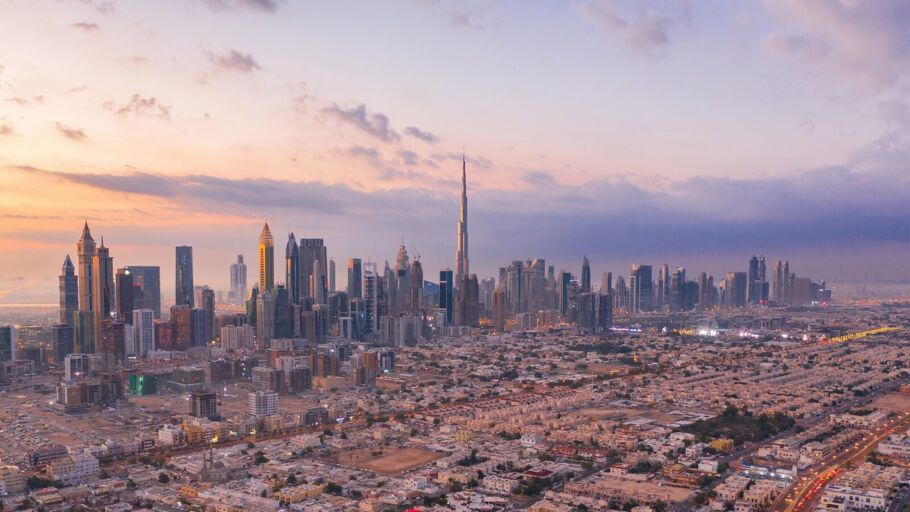
The international media narrative and the daily reality in Dubai are two very different things. This was one of the central themes of the conversation and one of the reasons Artur wanted to speak directly with someone living and working in the city rather than rely on outside commentary.
As Farooq explained, approximately 40 days into the regional conflict, over 2,500 drones, ballistic missiles, and cruise missiles have been sent toward the UAE. However, as he put it: "Each and every one has been intercepted that was falling within the cities of Dubai and Abu Dhabi and the other Emirates as well." While some debris has fallen and the death toll has tragically reached eight people, there has been no structural destruction of the kind that would compromise the city's infrastructure or livability.
The city continues to function. As Farooq described it: "On ground in Dubai, the restaurants are open, the malls are open, the clubs are open." Traffic has reduced so dramatically that Dubai has effectively become what he called "a 15-minute city, you can get from one place to another in 15 minutes."
Leadership confidence: a signal that matters
One of the most striking points Farooq made was about the visible presence of the UAE's leadership during the crisis. Sheikh Mohammed bin Rashid Al Maktoum has been seen multiple times walking through Dubai Mall, having coffee, and attending the Dubai World Cup horse racing event at the Meydan racecourse, an open-air venue.
As Farooq put it: "This is a real show of confidence that if your ruler is out and about on the streets, in the mall, you can walk up to him. It is a real show of strength that they are confident about their defence."
Dubai's current operating status (April 2026)
| Indicator | Status (from interview) |
|---|---|
| Restaurants, malls, clubs | Open and operating |
| Flights | Resumed |
| Schools | Expected to reopen from the following week |
| Tourism | Significantly reduced — hotels underperforming |
| Real estate transactions | March was a standstill; activity expected to resume from April onwards |
| Traffic | Dramatically reduced — Dubai has become a "15-minute city" |
| Defence systems | 2,500+ projectiles intercepted targeting populated areas |
The real estate market: four years of growth meet a sudden pause
Dubai real estate market was coming off four consecutive years of very strong performance before the current situation. As Farooq described it, the market had seen double-digit annual growth in many areas, with 20% or more in some segments. Developers were launching projects to meet a population that was growing by 200,000 to 400,000 people per year. Demand was overwhelming supply.
Then, in March 2026, the market hit pause. As Farooq put it: "March has sort of been on a standstill. Anyone that was making a decision has sort of paused." The combination of geopolitical tension, the holy month of Ramadan (with shorter work hours and fasting), and the Eid break created what he described as an unusually quiet period.
Crucially, however, the market has not collapsed. Sellers are not panic-selling. As Farooq explained: "Sellers are not going to the market and shaving off 30% of their asking price and just trying to get out." There is, he said, "a lot of equity in the market" — meaning that most owners bought at prices well below current values and have no financial pressure to sell at a loss.
A real example: the Pearl Jumeira villa
Farooq shared a specific case from the day before the interview. An owner listing a high-quality villa on Pearl Jumeira island — listed at over 15 million dirhams — had decided to keep his listing price unchanged but was privately willing to accept a 10–15% haircut.
As Farooq described it: "He didn't want to reduce his listing price, but he's willing to take roughly a 10 to 15% haircut on his price." This captures the mood of the secondary market: no panic, but realistic flexibility behind the scenes.
Where the real pricing opportunities are: developer discounts and distressed sectors
Perhaps the most actionable part of the conversation was Farooq's breakdown of where buyers can currently find real value. After years in which developers dictated terms to buyers, the dynamic has shifted dramatically.
As Farooq explained about the pre-crisis market: "If you're launching a thousand units and you have 3,000 buyers... they're almost doing the buyer a favour by giving them the unit." Payment plans were non-negotiable. Discounts were non-existent. That era, for now, is over.
Current developer discounts (from the interview)
| Developer type | Before the crisis | Current situation (April 2026) |
|---|---|---|
| Big / government developers | No discounts — non-negotiable terms | 3–4% discount, willing to negotiate |
| Private developers | Limited flexibility, high demand | 10–15% discount on new projects, plus waivers |
| Secondary market (prime) | Sellers holding firm, competitive bidding | Listing prices maintained; 10–15% negotiable privately |
Farooq was direct about the comparison: "Right now they're willing to negotiate like they were back in COVID."
The three sectors creating selling pressure
Beyond developers, Farooq identified three interconnected industries whose difficulties are expected to push real estate onto the market in the coming months. Many business owners in these sectors also hold substantial property portfolios:
1. Tourism and hospitality: As Farooq described: "Anyone that has anything to do with tourism industry is very badly affected — hotel owners or anyone that is potentially a supplier to a hotel, or if you have a car rental business that is linked to tourism industry, or you own a desert camp."
2. Real estate services: The broader real estate ecosystem, closely tied to tourism and population growth, has also been impacted.
3. Shipping and logistics: As Farooq noted: "The third industry that is also badly affected is your shipping and logistics businesses. Those guys are affected. So a bunch of these guys also own a lot of real estate."
Off-plan buying in Dubai: how the protections actually work
Artur raised the question of off-plan protections from a very personal angle, he had been planning a trip to Dubai to purchase an off-plan unit himself before the situation escalated. As he put it: "I was literally not buying the tickets to Dubai, but planning the trip for that off-plan unit that we were discussing."
This made the question practical rather than theoretical: if a buyer commits money to an off-plan development today, what actually protects that investment?
The escrow system explained (from the interview)
Farooq explained the first layer of protection: "All the money that an investor pays in Dubai when buying off-plan goes into an escrow account of that project. It doesn't go into their corporate account. That money is managed by the Dubai Land Department and it can only be used for that particular development."
The Dubai Land Department oversees every stage of construction and releases funds to the developer only once predefined milestones are met. As Farooq described: "Only once the developer has reached, let's say 20% of construction, only then are those or part of those funds released to the developer."
As Farooq summarised the trade-off: the biggest discounts (10–15%) come from private developers, but they also carry the most execution risk. Government developers offer smaller discounts (3–4%) but sovereign backing. As Artur noted: "That's why risk pays off sometimes."
What happens if debris damages your property?
Farooq shared a specific example: a property that suffered minor debris damage from an intercepted projectile. The government's response was immediate and comprehensive.
As Farooq recalled: "The government said, we will take care of everything. You have nothing to worry about." The property described as slightly older, was being fully rebuilt to brand-new standards. In the meantime, the affected residents were given "apartments on the beach, literally, while they're waiting for their property to get fixed up."
What should buyers and sellers do right now?
This was the most practically relevant part of the conversation. Artur posed it directly: if a seller comes to you wanting to list, what do you recommend? If a buyer wants to purchase, what do you tell them?
For buyers: a rare window
· Cash is king right now: Farooq was unambiguous: "If you're a buyer with cash today, you can negotiate your terms, which I think is something that was not possible."
· The current window is real: As he put it: "Right now is a good opportunity for anyone that is looking to buy whatever you were buying in January or February or looking at. Right now you can get a real haircut on those prices."
· Medium-term winners: Farooq's view on today's buyers: "People that are buying today are going to be real winners in this market and going to see their capital appreciate."
· Risk appetite matters: Artur acknowledged that not every buyer is wired the same way. As he observed: "Today for sure, you can get the best possible price... and then in a year's time feel like a winner, but not every buyer is wired like that."
For sellers: hold if you can
· If you can wait — wait: Both agreed that the recommendation for sellers without financial pressure is to hold. There is substantial equity in the market and no reason to sell at a discount if there is no urgency.
· If you must sell — be privately flexible: As Artur summarised, and Farooq confirmed: "We're listing it officially at the similar prices as we did, but unofficially you're gonna have to accept the discount." Farooq responded: "100%, exactly."
· Less unique properties may face deeper discounts: Artur pointed out: "If the properties are less special or less unique, maybe in some cases, this can be higher."
The recovery timeline: when does Dubai bounce back?
Both Artur and Farooq addressed the timeline question with honest nuance rather than optimistic soundbites.
Farooq was clear that recovery will not be instantaneous, even in the best-case scenario: "Even if the war ends today, it will still take six to nine months for people to get out of this trauma, to forget what happened and to move."
He acknowledged the headwinds directly: "We rely a lot in real estate on the overseas buyers that were coming into Dubai and the population increase which was happening... That rate of increase is going to slow down for this year. You might even see some negative growth potentially this year."
Factors favouring recovery vs. headwinds (from the interview)
| Factors favouring recovery | Headwinds to monitor |
|---|---|
| UAE has one of the world's largest sovereign wealth funds, "absolutely no shortage of money to reinvigorate the economy" | Population growth likely to slow dramatically — possible net negative growth |
| Dubai's marketing machinery, "the leadership over here knows how to market Dubai internationally" | International buyer confidence will take 6–9 months to recover |
| Proven defence systems, "they're working around the clock to make sure that Dubai and its residents are secure" | Certain areas may face oversupply |
| Strong fundamentals, "they've built such a beautiful city... it's taken 20, 30 years" | Companies laying off employees in affected sectors |
| Consistent government direction, "no Democrats and Republicans every four years" | Newer developments will face softer demand from international buyers |
Farooq's prediction for what will hold best: "Prime locations, scarcity-driven assets, areas that have a strong rental demand will be more resilient. Newer developments will have softer demand."
Artur added a broader perspective: "There's not many places in the world that can compete with Dubai. And that in the long-term as well... they are limited and there's so many people."
The Marbella connection: what this means for Drumelia's clients
A significant portion of Drumelia's client base already operates a multi-property lifestyle that includes Dubai. As Artur shared during the conversation: "I have quite a lot of clients that I talk to who have a lifestyle where they own a property in Dubai and they usually spend there like maybe six months maximum. And then they own another two properties, one in Marbella and another one maybe somewhere like Austria or Sweden."
The behaviour of these clients has been consistent: "None of them are talking about selling their assets distressed. They did leave as soon as they could and they just kind of, okay, for this year we're going to stay in Europe. Next year we'll see."

Growing interest in Marbella from the Middle East
Artur confirmed that Drumelia is seeing early signs of new demand from the region: "We are getting a bit of traction from clients from the Middle East interested in potentially buying a property in Marbella." The agency has already hired an agent from a Dubai-based real estate company to serve this emerging client segment.
Farooq confirmed the trend from his side: "There are going to be some high-net-worth individuals in Dubai that are potentially looking to diversify... at a level that some of them might not have considered before. And what natural place than Marbella to own a house."
Why geographic diversification matters more than ever
The current situation reinforces a principle that sophisticated investors already understand: holding properties in multiple geographies with different risk profiles is not just a lifestyle choice, it is a wealth protection strategy. As Artur observed, his multi-property clients are not panicking; they are simply rotating where they spend their time while their Dubai assets appreciate over the longer term.
For Dubai-based families exploring Marbella for the first time, the Costa del Sol offers a Mediterranean climate, transparent legal framework under Spanish and EU law, world-class international schooling, and a proven luxury property market where Drumelia operates with an average transaction of approximately €3.5 million.
Frequently asked questions
Is now a good time to buy property in Dubai?
According to Farooq, who has been in the Dubai market since 2008, this is the strongest buyer's window since COVID. Developers are offering discounts of 3–15% for the first time in four years, and secondary market sellers are privately willing to negotiate 10–15% below listing prices. As he put it: "People that are buying today are going to be real winners in this market." However, every buyer must assess their own risk tolerance, the timeline for resolution remains uncertain.
How safe is off-plan investment in Dubai right now?
Off-plan purchases are protected by a government-managed escrow system overseen by the Dubai Land Department. Funds can only be used for the specific project and are released to the developer in stages as construction milestones are met. Government-backed developers like Emaar, Meraas, and Nakheel are, in Farooq's words, "bulletproof, 100% sure." Private developers carry greater execution risk but currently offer steeper discounts.
Should current Dubai property owners sell now?
The advice from both professionals is clear: if you can hold, hold. There is significant equity in the market and sellers are not under general pressure to reduce prices. Those who must sell should maintain their listing price publicly but expect to negotiate 10–15% below in private. Both Artur and Farooq agree that property values are expected to recover once the situation resolves.
Will Dubai property prices crash?
Neither professional expects a crash. Farooq predicts "a little bit of softening in prices" rather than a major correction. He emphasised that prime locations and scarcity-driven assets will be the most resilient, while newer developments in less established areas may face softer demand. The substantial equity in the market and the UAE's sovereign financial strength make a collapse unlikely.
Are Dubai-based buyers looking at Marbella?
Yes. Drumelia is seeing early-stage interest from Middle East-based high-net-worth individuals exploring Marbella as a diversification option — at a level some of them had not previously considered. Drumelia has hired an agent from a Dubai real estate agency to serve this growing segment. For buyers exploring Marbella for the first time, visit Buying property in Marbella.
How long will it take for the Dubai market to recover?
Farooq estimates that even if the conflict ends immediately, it will take six to nine months for buyer confidence to return fully. As Artur noted, the duration of the conflict itself will shape the recovery timeline: "Part of the effect that this might have will depend on how long it lasts." Both agreed that Dubai's track record of bouncing back, supported by massive sovereign wealth reserves — makes a strong recovery a question of when, not if.
Considering international property diversification?
Whether you are a Dubai-based buyer exploring Marbella for the first time, a multi-property owner rebalancing across geographies, or a Marbella seller curious about cross-market demand, Drumelia's team can advise with a tailored, data-informed approach.
Contact Drumelia to discuss your objectives or request a personalised property shortlist.


