Purchase Guide: How to Buy Property in Marbella

Buying a property in Marbella is an exciting step, but it comes with unique processes that every international buyer should understand. From securing your NIE number and arranging finances to navigating Spanish property taxes, due diligence, and the notary system, each stage matters. Marbella’s luxury real estate market is highly competitive, and the most prepared buyers secure the best opportunities. This guide walks you step by step through the entire journey, making the process clear even if you have zero prior knowledge of buying property in Spain. With expert insights and practical checklists, you’ll be ready to purchase with confidence and enjoy the true luxury of Marbella living.
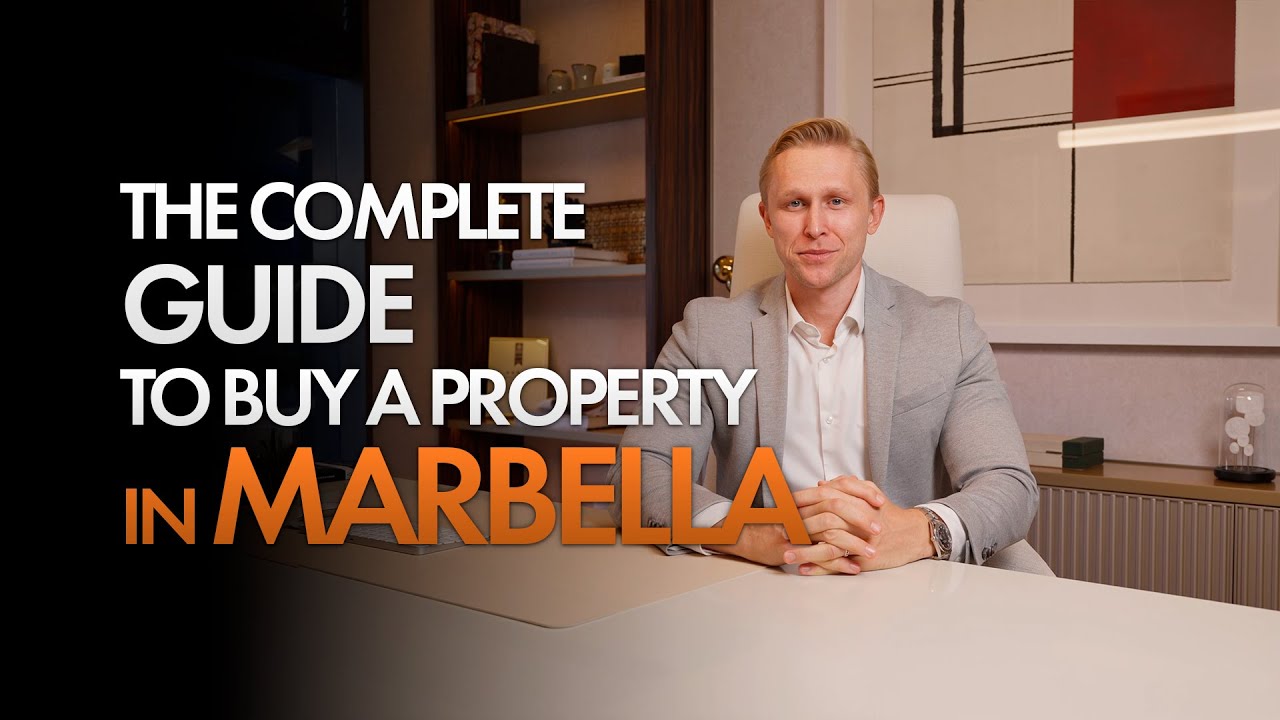
Phase 1 – Preparation
Marbella is not just another Mediterranean resort. It is a world-recognised luxury destination — a brand known from London to Dubai, from New York to Moscow. Here, UHNWIs, entrepreneurs, and international families invest in more than just property; they invest in prestige, security, and lifestyle.
But entering Marbella’s property market requires more than enthusiasm. It requires precise preparation. At Drumelia Real Estate, we have closed transactions from €180,000 apartments to record-breaking €40M villas, with many deals in the €10–20M segment. We know from experience: preparation is what separates success from disappointment.
Why Marbella Appeals to Global Buyers
- 320+ days of sunshine with a unique Sierra Blanca microclimate
- International connectivity: Málaga Airport just 40 minutes away
- Lifestyle: Michelin-starred dining, private clinics, golf courses, designer boutiques, and a thriving international community
- Security: Marbella remains one of Europe’s safest and most stable property markets
Browse Marbella’s luxury properties
Step 1: Define Your Real Estate Goals
Before viewing homes, identify your main purpose.
- Primary residence → prioritise schools, healthcare, and year-round living
- Holiday home → focus on beachfront access, gated communities, and easy upkeep
- Investment → select homes with high resale value and rental demand
Tip: Even if you plan for long-term ownership, resale potential should always factor into your choice.
Step 2: Budget for All Costs and Taxes
Every listed property price is net — taxes and fees must be added.
| Buying Costs in Marbella — Quick Overview Resale and new-build purchases in Spain involve taxes, legal fees, and notary/registry costs on top of the asking price. | |||
| Property Type | Main Taxes | Other Costs | Total Extra |
| Resale | 7% Transfer Tax | ~1% lawyer + ~0.5% notary/registry | ~8.5–9% |
| New Build | 10% VAT + 1.2% Stamp Duty | ~1% lawyer + ~0.5% notary/registry | ~12–13% |
| Investor insight If you resell within 5 years, transfer tax can sometimes be reduced to 2%. If you hold longer, the difference plus interest may need to be settled later. | |||
Estimate costs with our Marbella property purchase guide
Step 3: Prepare Financially Before Searching
- NIE Number → Spain’s Foreigner Identification Number, mandatory for all property purchases
- Spanish Bank Account → not obligatory, but highly advisable. It simplifies utility payments, community fees, mortgage management, and legal compliance
Mortgage financing:
- Residents → up to 80% financing
- Non-residents → around 50%
- Typical rate (2025) → around 3.3%, sometimes slightly more with international banks and slightly less with local ones
Loans are based on the lower of the purchase price or bank valuation. Example: if a villa is listed at €100 and the valuation is €90, the mortgage is calculated on €90.
Tip: Buyers who arrive with NIE, financing, and funds ready often beat higher offers. Unprepared buyers risk losing opportunities or negotiating from weakness.
Step 4: Choose the Right Real Estate Agent
In Marbella, most agents have access to the same broad pool of properties. The difference is not who has the listings — the difference is how they work with you.
When choosing an agent:
- Test response time and professionalism
- Judge availability and commitment
- Evaluate negotiation and listening skills
Important note: In Spain, the agent’s responsibility is not strictly defined. Some agents only open doors. Others — like Drumelia — guide the entire process: organising inspections, attending valuations, helping clients open bank accounts, checking deeds at the notary page by page, and supporting with reforms and furnishing.
The right agent ensures a smooth, stress-free purchase. The wrong one leaves you alone with problems.
Step 5: Assemble Your Professional Team
- Lawyer → verifies ownership, debts, and contracts, and represents you at the notary
- Tax Advisor → critical for structuring high-value acquisitions, especially above €3.7M where solidarity tax may apply
- Surveyor / Notary / Bankers → supporting roles, coordinated by your lawyer and agent
Your core team = agent + lawyer + tax advisor.
Preparation Checklist
- ✅ Define property goals: residence, holiday home, or investment
- ✅ Budget 12–13% for costs and taxes
- ✅ Obtain NIE number
- ✅ Open a Spanish bank account
- ✅ Secure financing
- ✅ Select a trusted agent and independent lawyer
Key Takeaways
- Define your goals clearly before searching
- Budget 12–13% extra for fees and taxes
- Obtain NIE and open a Spanish bank account early
- Expect financing to be based on valuation, not just price
- Work with a full-service luxury agent and trusted lawyer
FAQ
What is an NIE number?
A Spanish identification number required for property purchases by foreigners.
How much extra should I budget beyond the property price?
Usually around 12–13% for taxes, legal fees, and notary/registry costs.
Do I need a Spanish bank account?
Not mandatory, but highly recommended for smoother transactions and utilities.
Is financing available for non-residents?
Yes, typically up to 50%, based on the lower of price or valuation.
How do I choose the right real estate agent in Marbella?
Look for responsiveness, negotiation skills, and full-service support.
Can I work with multiple agents at once?
Yes, but it often creates confusion. Committing to a trusted agent usually leads to better service and stronger advice.
Conclusion
Buying in Marbella begins long before viewings. With the right preparation, you can act quickly, negotiate strongly, and secure homes that others miss.
Begin your journey: Luxury villas in Marbella for sale
Phase 2 – Searching and Viewing
The viewing stage is where your Marbella property dreams begin to take shape. But in a market as dynamic as Marbella luxury real estate, the difference between a smooth journey and a frustrating one lies in how you organise, evaluate, and select homes.
At Drumelia Real Estate, we know what it takes to turn viewings into smart investments — from beachfront estates on the Golden Mile to ultra-private villas in La Zagaleta.
Best Areas in Marbella for Luxury Buyers
- Golden Mile → Marbella’s most prestigious corridor, lined with beachfront villas, luxury apartments, and exclusive social hubs
- Sierra Blanca / Cascada de Camoján → gated hillside estates, mountain views, and unmatched privacy
- Nueva Andalucía → Golf Valley, combining golf courses, modern villas, and family-friendly living
- San Pedro → exclusive beachfront enclaves with a relaxed lifestyle
- La Zagaleta / El Madroñal / La Quinta → ultra-private estates with large plots, strict security, and tranquillity
- East Marbella → sandy beaches and a more authentic local feel, though summer crowds can be intense
- Estepona → expanding luxury market with new developments and long-term potential
- Marbella Centre → convenient for shops and restaurants, but luxury stock is more limited
Tip: Central areas offer convenience, while hillside areas trade proximity for privacy and panoramic views.
Explore Marbella’s prime neighbourhoods
How to Organise Property Viewings
- See no more than 5–6 properties per day
- Always schedule a second viewing for shortlisted homes
- Evening visits are essential
- Drive around the communities yourself after guided tours
Tip: Good agents curate efficient viewing days that maximise clarity, not exhaustion.
How to Evaluate Properties During Viewings
Apartments and plots → price per m² is a useful baseline. But note: new apartments often feel smaller than the plans suggest.
Villas → square metres are one of the least reliable indicators of value. What matters more:
- Location and views
- Privacy of the plot
- Orientation and natural light
- Architecture and layout
- Quality of materials and finishes
Tip: An experienced Marbella luxury real estate agent helps you weigh these invisible factors so you do not overpay for size while overlooking lifestyle quality.
Off-Plan vs Ready Homes
Buying off-plan can be profitable but carries specific risks. Ready homes offer security and immediacy.
| Off-Plan vs Ready Homes in Marbella A practical comparison of growth potential, risk, timing, and availability in prime locations. | ||
| Factor | Off-Plan | Ready Homes |
| Price | Lower entry, often below current market | Current market price |
| Capital Growth | Potential upside during the build period | Slower appreciation, more already priced in |
| Choice | Wider selection in new complexes | Limited stock in prime locations |
| Risk | Higher risk; delays of 6–12 months are common | Lower risk |
| Prime Zones | Rare in the very best areas | Most options are resale |
| Move-In Timing | Usually 1–3 years | Immediate use |
| Key insight Off-plan can offer growth potential, but ready homes provide certainty. In Marbella’s most established prime areas, resale dominates. | ||
Viewing Checklist
- ✅ Limit viewings to 5–6 homes per day
- ✅ Revisit shortlisted homes, ideally in the evening
- ✅ Drive neighbourhoods independently
- ✅ For apartments, confirm feel and scale in person
- ✅ For villas, focus on privacy, orientation, and light
- ✅ Compare off-plan and ready homes carefully
Key Takeaways
- View fewer homes, but with more depth
- Revisit at night to test privacy and atmosphere
- Neighbourhood exploration matters as much as the home itself
- Villas are valued by location and design, not just size
- Off-plan offers upside but carries developer risk
FAQ
How many homes should I see daily?
Ideally no more than 5–6.
Should I revisit homes?
Yes. A second visit, especially in the evening, gives a clearer perspective.
Is off-plan safe in Marbella?
It can be, especially with established developers, but delays are common and due diligence is essential.
Which areas suit luxury buyers best?
Golden Mile, Sierra Blanca, Nueva Andalucía, and La Zagaleta are among the top choices.
Why rent a car after viewings?
To explore neighbourhoods yourself and understand daily-life convenience.
What mistakes do buyers make during viewings?
They often focus too much on size and not enough on privacy, orientation, and resale potential.
Conclusion
The search and viewing phase defines your Marbella property journey. By organising viewings wisely and evaluating homes properly, you turn tours into sound long-term decisions.
Begin your search: Exclusive villas for sale in Marbella
Phase 3 – Making an Offer, Negotiating and Due Diligence
Once you have found the right property in Marbella, the journey enters its most sensitive phase: making an offer, negotiating terms, and carrying out due diligence. This is where excitement must be balanced with caution.
In the Marbella luxury real estate market, deals are often lost not because of price, but because of poor preparation, weak negotiation strategy, or incomplete checks.
Making an Offer: More Than Just Numbers
A good offer in Marbella should present a complete picture. That means specifying:
- The exact purchase price
- Any taxes or conditions to be covered
- What is included in the sale, such as furniture or extras
- A clear payment schedule
- A realistic completion timeline
A clean, professional offer that answers the seller’s questions upfront signals that you are serious and ready to move forward.
Why Serious Buyers Win Deals
In Marbella’s luxury market, sellers usually prioritise certainty over a slightly higher offer. Buyers who already have their NIE, lawyer, funds, and timeline prepared often win even when their bid is lower.
Golden rule: preparedness beats price.
Common Negotiation Mistakes to Avoid
- Trying to negotiate directly with the seller
- Pushing too hard for small discounts
- Moving too slowly with paperwork
Negotiations can become emotional very quickly. Agents and lawyers preserve objectivity and keep the deal alive.
Reservation Agreement: The First Step of Commitment
Once an offer is accepted, the next step is usually a reservation contract. This typically involves paying around 1% of the purchase price to take the property off the market while contracts are prepared.
The reservation fee is generally non-refundable unless due diligence reveals a serious legal or technical issue.
Important: the reservation fee should go to the seller, not be structured as a penalty retained by the agency if the buyer withdraws.
Reservations are not bulletproof. Rarely, a seller may still choose another buyer if a significantly stronger offer appears. That is why speed after reservation matters.
Due Diligence: Protecting Your Investment
Due diligence in Marbella usually covers three areas:
- Legal due diligence → ownership, debts, liens, community charges, registration, contracts, inventory lists
- Urbanistic due diligence → planning compliance, LPO, irregular extensions, town hall certificates
- Technical due diligence → structure, plumbing, electricity, HVAC, general condition, renovation budgeting
For villas, basements are often used differently from what appears on paper. That is common. Above-ground extensions are more sensitive and require closer review.
Lawyers should also request confirmation from the town hall that there are no outstanding planning infractions.
The Private Purchase Contract (PPC)
Once due diligence is satisfactory, buyer and seller sign the Private Purchase Contract. At this point, the buyer usually pays a 10% deposit.
- If the buyer withdraws, the deposit is lost
- If the seller withdraws, they must return double the deposit
The PPC usually takes place two to four weeks after reservation. Completion at the notary often follows one to two months later.
Key Takeaways
- Offers should be structured and professional
- Negotiations should be handled calmly through advisors
- Due diligence is essential, not optional
- The reservation is the first commitment, but the PPC is the real lock-in point
FAQ
How much is the reservation fee?
Usually around 1% of the property price.
Can I lose it?
Yes, unless due diligence uncovers serious issues.
Can sellers still accept another offer after reservation?
Rarely, yes, if another buyer offers significantly more.
How long does due diligence take?
From a few days to several weeks, depending on the documents required.
What are the risks of buying without an LPO?
Financing, resale, and legal certainty can all become more complicated.
What about villa extensions or reforms?
Recent illegal works can create serious problems. Older ones may still limit future building permissions.
How much deposit is paid at PPC?
Normally 10% of the purchase price.
What happens if the seller withdraws after PPC?
They must return double your deposit.
Why should I not negotiate directly with the seller?
Because negotiations can become emotional and damage the deal.
Conclusion
This is the stage where preparation pays off. Making an offer the right way and completing proper due diligence protects both your money and your peace of mind.
Begin exploring: Exclusive villas for sale in Marbella
Phase 4 – Notary, Completion and Payment
After months of preparation, searching, and negotiation, you reach the final milestone: the notary appointment. This is where ownership officially transfers, contracts are signed, and keys are handed over.
The Role of the Notary in Spain
The notary is a neutral public official whose role is to ensure the transaction is legally valid. The notary does not represent either side.
They:
- Verify identities and documents
- Review the deed and contracts
- Confirm that legal requirements are met
- Oversee the signing process
If you cannot attend in person, you can give power of attorney to your lawyer to sign on your behalf.
What Happens at the Signing
- The notary reads the deed aloud
- Buyer and seller sign
- The notary signs
At that moment:
- Ownership transfers
- The seller receives the remaining balance
- The buyer receives the keys
Once the notary signs, you are legally the owner.
How Payments Work at Completion
| Payment Methods at Completion in Marbella In practice, banker’s drafts remain the standard method for secure completion in high-value transactions. | ||||
| Method | How It Works | Pros | Cons | Common in Marbella? |
| Banker’s Drafts | Bank issues certified drafts to the seller and other parties if needed | Secure, immediate, guaranteed | Small bank fees | ✅ Standard |
| Bank Transfers | Transfer initiated during signing | Direct and legal | Can take hours to clear | ⚠️ Rare |
| Notary Escrow | Buyer transfers funds to the notary account | Neutral structure | Not common locally | ❌ Very rare |
| Key insight For Marbella luxury real estate, banker’s drafts remain the cleanest and most trusted completion method. | ||||
If You Are Financing with a Mortgage
When buying with a mortgage, your bank also attends the notary. Two deeds are signed at the same session:
- The purchase deed between buyer and seller
- The mortgage deed, giving the bank security
Taxes and Costs After Completion
- Taxes → Transfer Tax or VAT/Stamp Duty must be paid within 30 days
- Notary and Land Registry fees → payable on registration
- Bank fees → for banker’s drafts or transfers
- Utility and community costs → transferred into your name from completion
Overall, buyers should still budget roughly 12–13% extra on top of the purchase price.
Early Possession Requests
Buyers sometimes ask to move in before notary signing. Sellers usually refuse. Spanish law makes this risky for them if the deal later collapses.
In rare cases, sellers may consider it only against a very high non-refundable deposit, but many still decline.
Completion Checklist
- ✅ Attend the notary or grant power of attorney
- ✅ Sign the purchase deed and pay the remaining balance
- ✅ Collect the keys
- ✅ Pay taxes within 30 days
- ✅ Update utilities and community fees
- ✅ Register the deed through your lawyer
FAQ
Do I need to attend the notary in person?
No. You can grant power of attorney to your lawyer.
What is the safest way to pay the balance?
Banker’s drafts issued by a Spanish bank are the usual standard.
When do I need to pay taxes after completion?
Within 30 days. Your lawyer normally handles the process.
What happens if the seller has an existing mortgage?
Part of the payment can go directly to the bank to cancel it on the same day.
Can I move in before the notary appointment?
Almost never.
How long until I appear as the registered owner?
Usually about a month, once the Land Registry updates the deed.
Conclusion
The notary appointment is where preparation becomes ownership. With the right guidance, payments are secure, taxes are settled, and the transfer of keys is seamless.
Start exploring: Exclusive Marbella villas for sale
Phase 5 – After-Sale Essentials
Many buyers think the process ends the moment they sign at the notary and receive the keys. In reality, that is only the beginning of ownership in Marbella.
There are still important steps — legal, financial, and practical — to ensure your property remains secure, compliant, and stress-free to enjoy.
Registering Your Deed with the Land Registry
Once the notary signs, the title deed is sent to the Land Registry. This is the official step that confirms you as the registered owner.
- The update usually takes about one month
- Your lawyer normally handles the process
- The local council is also notified so IBI and Basura can be billed correctly
Without this step, future buyers, banks, and tax authorities will not see your name properly reflected in the public record.
Annual Property Taxes in Marbella
- IBI → annual property tax based on cadastral value
- Basura → annual rubbish collection charge
- Non-Resident Income Tax → applies even if you do not rent the property, if you are not resident in Spain full-time
Residency and Tax Implications
- Non-residents → usually keep obligations limited to property-related taxes
- Residents → if you spend 183 days or more in Spain, you may become tax resident and need to declare broader worldwide assets and income
Many international buyers choose to remain non-resident for simplicity.
The Solidarity Tax on Large Fortunes
The Solidarity Tax may apply to net assets above €3.7M per person. Mortgages and debt directly linked to the property reduce the taxable base.
For many buyers, it does not apply. For ultra-luxury acquisitions, it should be reviewed with a tax advisor.
Utilities, Community Fees, and Insurance
- Utilities → water, electricity, internet must be transferred into your name
- Community Fees → if you buy in a community, you become responsible from completion
- Insurance → should begin on the same day as completion
Forgetting utilities or insurance can create unnecessary risk, penalties, or service interruptions.
Renting Your Property Short-Term
If you want to rent your home for less than two months at a time, Andalusian rules generally require a short-term rental licence.
Not all communities allow tourist rentals, so this should be checked before purchase if rental income matters to you.
After-Sale Essentials Checklist
- ✅ Register the deed with the Land Registry
- ✅ Notify the town hall for IBI and Basura
- ✅ Clarify your residency status
- ✅ Review Solidarity Tax thresholds if relevant
- ✅ Transfer utilities and community fees
- ✅ Arrange home insurance immediately
- ✅ Apply for a rental licence if needed
FAQ
How long does it take for my name to appear in the Land Registry?
Usually around one month.
Do I still pay Spanish tax if I do not live here?
Yes, non-residents usually pay a small annual tax on imputed income.
What happens if I forget to switch utilities?
Services may be cut off and unpaid bills may accumulate.
What is the Solidarity Tax, and will it affect me?
It applies only above €3.7M per person, so many buyers are unaffected.
Do all properties qualify for a rental licence?
No. Some communities prohibit tourist rentals.
Are property taxes in Marbella high compared with other luxury markets?
Usually not. They are often modest compared with cities such as London or Paris.
Conclusion
After completion, real ownership begins. Registration, taxes, utilities, and compliance protect your investment and make life in Marbella much easier.
Explore next: Drumelia’s Marbella lifestyle guide
Phase 6 – Advanced Considerations
By this stage, you understand the essentials. But in Marbella’s luxury market, advanced considerations often define the difference between a smooth acquisition and a costly mistake.
Buying as an Individual or Through a Company
Most buyers purchase in their personal name because it is simpler and more direct. Buying through a company usually only makes sense if you already have an existing international structure or a specific tax strategy.
Unless your advisor strongly recommends a company structure, buying personally is usually the most practical route.
Build, Reform, or Buy Ready-to-Move-In
- Buy a finished home → fastest and most predictable
- Reform an existing villa → can be attractive in prime locations, but brings permit risk, delays, and cost overruns
- Buy a plot and build → gives maximum control, but is the slowest and riskiest path
The right choice depends on your patience, risk tolerance, and how involved you want to be in the process.
Hidden Costs of Plots
Plots can look attractive on paper, but preparation costs are often underestimated. These may include retaining walls, geotechnical studies, soil reinforcement, and other site-specific works that can add substantial costs before construction even starts.
Taxes on Land Purchases
- Privately owned land → typically 7% Transfer Tax
- Company-owned land → typically 21% VAT
For individual buyers, either tax is simply a cost. For developers, the VAT structure may have advantages later.
Lifestyle Trade-Offs: Villas vs Apartments, Beachfront vs Mountains
- Villas → more privacy, land, and independence, but more maintenance
- Apartments and penthouses → easier lock-up-and-leave living, stronger security, less privacy
- Beachfront → direct sea access and prestige, but often smaller plots and busier surroundings
- Mountain-view estates → better privacy and panoramic views, but more driving
Other Ownership Considerations
- Solidarity Tax → relevant only for certain higher net worth situations
- Inheritance and Gift Tax → Andalucía is comparatively favourable for close relatives
- Utility and Tax Registrations → must be updated correctly after completion
FAQ
Should I buy in my own name or via a company?
Usually in your own name, unless a specialist advisor recommends otherwise.
Is building a villa in Marbella worth it?
It can be, but it brings more delay, complexity, and cost risk than buying a finished home.
Why is land sometimes taxed at 21% VAT?
Because company-owned land is taxed differently from privately owned land.
How much should I budget for plot preparation?
Conservatively. Hidden preparation costs can be substantial.
Villas or apartments — which is better?
That depends on your lifestyle priorities: privacy and land versus convenience and lower maintenance.
Phase 7 – Common Mistakes to Avoid
Even with good advice, buyers still make recurring mistakes in Marbella’s luxury real estate market. The good news is that most of them are avoidable.
Mistake 1: Not Preparing in Advance
Without your NIE, bank setup, and funds or mortgage preparation in place, you can lose the right property to a better-prepared buyer.
Mistake 2: Working With Too Many Agents
Because the market is shared, using too many agents often creates confusion, duplication, and weaker service. One trusted agent is usually better.
Mistake 3: Focusing Only on the House, Not the Area
A great home in the wrong setting is still the wrong purchase. Always test the neighbourhood at different times of day.
Mistake 4: Mishandling Negotiations
Buyers sometimes get emotional, over-negotiate small details, or delay too long. That can kill deals.
Mistake 5: Skipping Due Diligence
Even luxury homes can have legal or technical issues. Due diligence is your safety net.
Mistake 6: Underestimating Extra Costs
The asking price is not the full cost. Taxes, fees, moving, furnishing, and repairs all need to be budgeted properly.
Mistake 7: Ignoring Resale Potential
Even if you believe you are buying a forever home, circumstances change. Future resale should always remain part of the logic.
FAQ
Why is preparation so crucial?
Because Marbella’s market moves fast, and prepared buyers have the advantage.
Should I work with multiple agents?
Usually no. One trusted agent tends to serve you better.
Is due diligence always necessary?
Yes. Skipping it exposes you to avoidable risk.
What is the safest way to negotiate?
Calmly and professionally, through experienced advisors.
Phase 8 – The Buyer’s Checklist and Final Advice
After covering the full journey, this final phase brings everything together into one practical roadmap.
Step 1: Preparation
- Define your goal
- Set your full budget with taxes and fees
- Obtain your NIE
- Open a Spanish bank account
- Hire your lawyer early
- Plan financing in advance
Step 2: Choose Your Team
- Work with a reputable Marbella agent
- Choose an independent lawyer
- Add a tax advisor if needed
Step 3: Search and Viewings
- Visit key neighbourhoods
- Limit yourself to 5–6 properties per day
- Shortlist and revisit
- Drive around independently
Step 4: Understand Value
- Apartments and plots → price per m² can help
- Villas → focus on location, privacy, views, light, and quality
- Always think about resale
Step 5: Offer and Negotiation
- Make a clear, structured offer
- Secure the property with reservation once agreed
- Move quickly and professionally
Step 6: Due Diligence
- Legal check
- Urbanistic check
- Technical check
- Confirm in writing what is included in the sale
Step 7: PPC
- Sign the Private Purchase Contract
- Pay the 10% deposit
- Understand withdrawal consequences for both sides
Step 8: Completion at the Notary
- Sign the deed
- Pay the remaining balance
- Receive the keys
Step 9: After-Sale Essentials
- Register the deed
- Organise taxes
- Transfer utilities
- Set up insurance
- Apply for a rental licence if needed
Final Advice for Marbella Buyers
- Take the process step by step
- Do not rush, but be ready to act
- Choose a trusted agent and lawyer
- Remember that Marbella is international, competitive, and constantly evolving
When you prepare well, buying here can be one of the best decisions of your life.
FAQ
How long does the buying process in Marbella take?
On average, from offer to notary completion, around three months.
Is a Spanish bank account mandatory?
No, but it makes the process much easier.
What happens if I change my mind after paying the reservation?
If due diligence reveals serious issues, you may recover it. Otherwise, it is usually non-refundable.
Can I rent my Marbella property short-term?
Yes, but rentals under two months generally require a licence.
Why choose Marbella over other luxury markets?
Because Marbella combines sunshine, climate, lifestyle, infrastructure, and a strong international community in a way few European markets can.
Conclusion
Buying in Marbella is not overly complicated, but it does require preparation, good advice, and the right professionals by your side. The better you prepare, the smoother and safer the process becomes.